Oct 15
2026
2026
Abby Successfully Defends Dissertation Prospectus
Congratulations to Abigail Hayes, who successfully defended her dissertation prospectus.

The Advancing Research in Corrections (ARC) Lab, based in the UNO School of Criminology and Criminal Justice, conducts applied and theoretical research on institutional corrections, community corrections, and reentry.
Our work focuses on analyzing real-world correctional systems using rigorous quantitative and qualitative methods. Rather than studying policy in the abstract, we examine how policies, practices, and programs function in context, using data to evaluate outcomes, identify gaps, and inform more effective, equitable, and transparent approaches to corrections.
ARC's research spans correctional systems, individual behavior, and the policies and practices that shape outcomes.
How systems operate and affect populations across custody and supervision.
Theoretical perspectives that help explain behavior, institutional dynamics, and system change.
Examining patterns and predictors of misconduct and recidivism.
Assessing correctional interventions, programs, and services.
Outcomes, barriers, and pathways following release.
Development of assessment tools tailored to the operational needs of adult and juvenile justice agencies.
Identification, behavior, management, and system-level responses.
Use, conditions, and consequences within correctional settings.
Across these areas, the lab prioritizes research that is methodologically rigorous and directly relevant to policy and practice.
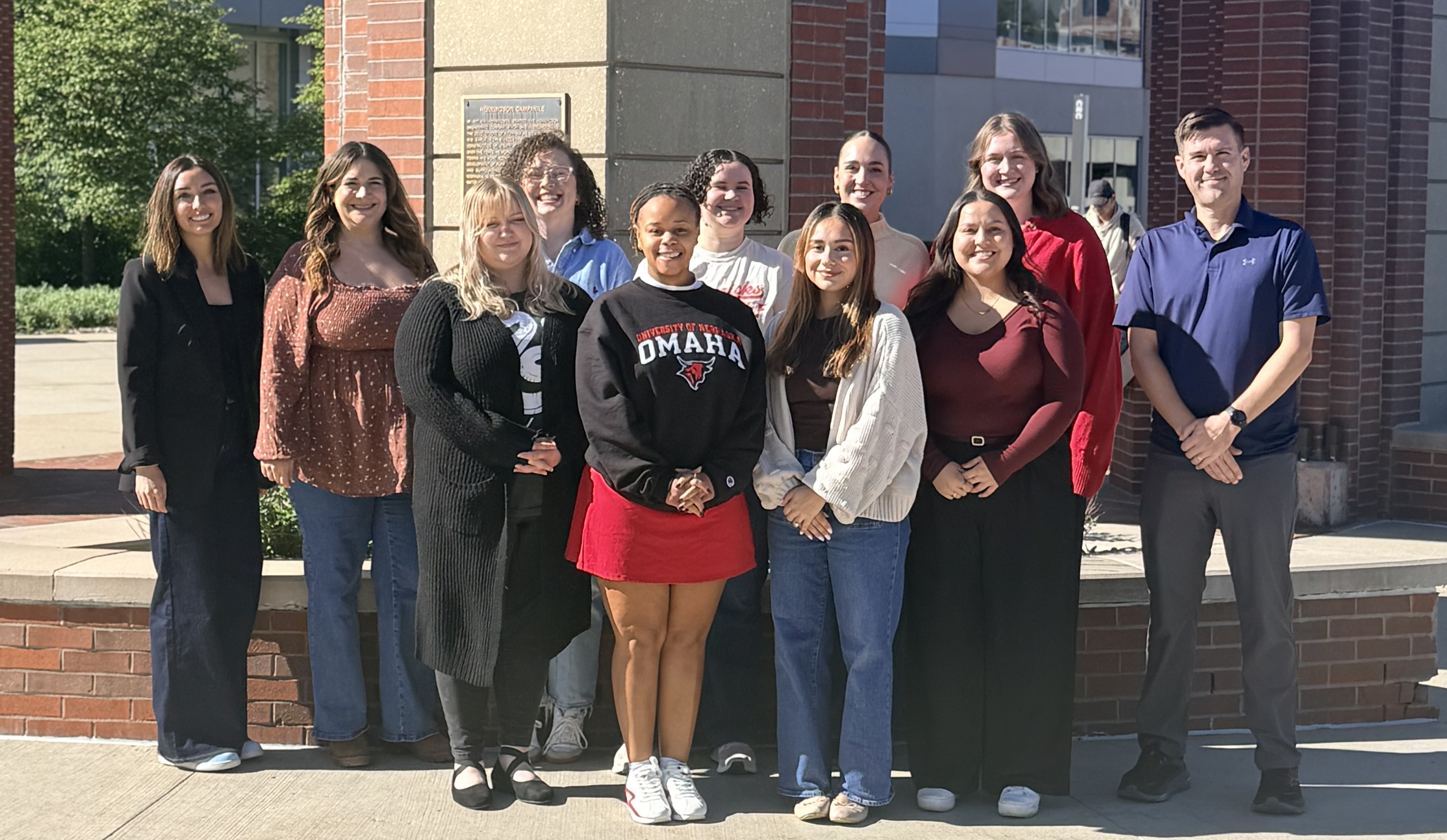
ARC brings together faculty, research staff, and graduate researchers working on shared questions about correctional policy, practice, and outcomes. The lab operates as a collaborative research environment where projects are developed, analyzed, and carried forward across teams.
Lab members contribute to ongoing research, engage with applied data, and participate in work that connects academic research to policy and practice in corrections.
ARC works closely with SCCJ faculty, the Nebraska Center for Justice Research (NCJR), the Juvenile Justice Institute (JJI), and a range of community, state, and federal partners. These collaborations allow the lab to conduct research using administrative data, collect primary data, evaluate active programs, and contribute to ongoing policy discussions.
Graduate students in the lab are involved in this work as part of ongoing projects, gaining experience with applied data, research design, and evaluation in real-world correctional contexts.
Congratulations to Abigail Hayes, who successfully defended her dissertation prospectus.
ARC Lab research published in Criminology was featured by KETV NewsWatch 7. The study finds that the predictive value of prior criminal charges declines over time, challenging …
Congrats to Abby Hayes on her first lead-authored publication in Crime & Delinquency.
UNO recently featured the ARC Lab’s outstanding showing in the 2026 American Society of Criminology Division on Corrections and Sentencing awards, recognizing five faculty …
ARC Lab students Caitlyn Jordon and Taylor Gonzales received the American Society of Criminology Division on Corrections and Sentencing’s Ben Steiner Excellence in Corrections …